Buy xosj.com ?
We are moving the project
xosj.com .
Are you interested in purchasing the domain
xosj.com ?
domain@kv-gmbh.de · 0541-91531010
Buy xosj.com ?
Does every car have an intercooler?
No, not every car has an intercooler. Intercoolers are typically found in turbocharged or supercharged vehicles, where they are used to cool the compressed air before it enters the engine. Naturally aspirated engines, which do not use forced induction, do not require an intercooler. Additionally, some older or lower-performance turbocharged vehicles may not be equipped with an intercooler. **
What does a large intercooler really bring?
A large intercooler brings improved cooling efficiency to the engine's intake air, resulting in increased power and performance. By reducing the temperature of the compressed air from the turbocharger, a large intercooler allows for a denser air charge to enter the engine, leading to more efficient combustion and higher horsepower output. Additionally, a large intercooler can help prevent heat soak and reduce the risk of engine knock, ultimately contributing to better overall engine reliability and longevity. **
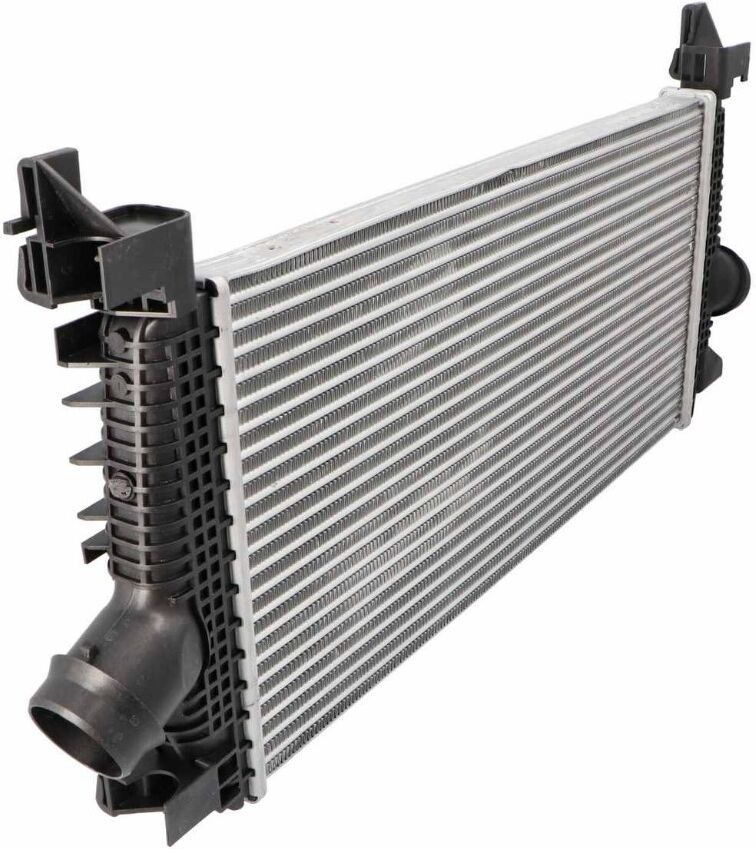

Similar search terms for CLIMTEX-CH4-660-Intercooler
Top-Angebote
Products related to CLIMTEX-CH4-660-Intercooler:
-
CLIMTEX CH4-1015 IntercoolerCore Length [mm]: 255; Core Width [mm]: 217; Core Depth [mm]: 50; Supplementary Article / Supplementary Info: Left connector, angled, Right connector, angled, with gaskets/seals; Cooling Type: air-cooled; Supplementary Article / Supplementary Info Info 2: with quick couplers; Cooling Fin Material: Aluminium; Radiator type: Mechanically jointed cooling fins; Water Tank Material (radiator): Aluminium54,49 £*Shipping: 8,45 £Secure redirect to the provider
-
CLIMTEX CH4-905 IntercoolerCooling Fin Material: Aluminium; Cooling Type: air-cooled; Water Tank Material (radiator): Plastic; Radiator type: Brazed cooling fins; Fitting Position: Right; Transmission Type: Manual-/optional automatic transmission; TecDoc Engine Number: 20709, 21316, 27356126,99 £*Shipping: 8,45 £Secure redirect to the provider
-
CLIMTEX CH4-762 IntercoolerCooling Fin Material: Aluminium; Cooling Type: air-cooled; Core Depth [mm]: 32; Core Length [mm]: 625; Core Width [mm]: 400; Water Tank Material (radiator): Plastic; Radiator type: Brazed cooling fins; for model code: Passat Estate; Construction Year from: 11/2009, 07/2009; TecDoc Engine Number: 22172, 21734, 22470, 24962120,99 £*Shipping: 8,45 £Secure redirect to the provider
-
CLIMTEX CH4-041 IntercoolerCooling Type: air-cooled; Core Length [mm]: 630; Core Width [mm]: 145; Core Depth [mm]: 65; Water Tank Material (radiator): Plastic; Cooling Fin Material: Aluminium; Transmission Type: Manual-/optional automatic transmission; Emissions Standard: Euro 473,99 £*Shipping: 8,45 £Secure redirect to the provider


-
Is it bad, 660?
It is not inherently bad to be 660. The number 660 is just a numerical value and does not have any inherent moral or ethical implications. Whether something is considered "bad" or not depends on the context in which it is being used or referenced. **
-
What is the binding energy of CH4?
The binding energy of CH4, also known as the bond dissociation energy, is the energy required to break the bonds between the carbon and hydrogen atoms in a methane molecule. This energy is approximately 439 kJ/mol. It represents the strength of the bonds holding the atoms together in the molecule and is a measure of the stability of the molecule. The higher the binding energy, the more stable the molecule is. **
-
What is the skeletal formula of CH4?
The skeletal formula of CH4 is a simple line drawing that represents the structure of the molecule. In the case of CH4, the skeletal formula consists of a single carbon atom with four hydrogen atoms attached to it. The carbon atom is represented by a point where the lines meet, and the hydrogen atoms are represented by lines extending from the carbon atom. This skeletal formula accurately conveys the structure of the methane molecule in a simplified and easy-to-understand way. **
-
What is the correct chemical equation: CO2 + 2 H2 -> CH4 + O2 or CO2 + 4 H2 -> CH4 + 2 H2O?
The correct chemical equation is CO2 + 4 H2 -> CH4 + 2 H2O. This is because carbon dioxide (CO2) reacts with four molecules of hydrogen (H2) to produce one molecule of methane (CH4) and two molecules of water (H2O). This balanced equation ensures that the number of atoms of each element is the same on both sides of the equation, satisfying the law of conservation of mass. **


What is the Aprilia RS 660?
The Aprilia RS 660 is a sportbike manufactured by the Italian motorcycle company Aprilia. It is known for its lightweight and compact design, making it a popular choice for riders looking for a high-performance bike. The RS 660 is equipped with a 660cc parallel-twin engine that delivers a balance of power and agility, making it suitable for both street and track riding. Overall, the Aprilia RS 660 is a versatile and well-rounded sportbike that offers a thrilling riding experience. **
What is the difference between CCl4 and CH4?
The main difference between CCl4 (carbon tetrachloride) and CH4 (methane) is their chemical composition. CCl4 contains one carbon atom and four chlorine atoms, while CH4 contains one carbon atom and four hydrogen atoms. Additionally, CCl4 is a non-polar molecule, whereas CH4 is a polar molecule due to the difference in electronegativity between carbon and hydrogen. Lastly, CCl4 is a man-made chemical used as a solvent and in fire extinguishers, while CH4 is a naturally occurring gas and is the primary component of natural gas. **
Top-Angebote
Products related to CLIMTEX-CH4-660-Intercooler:
-
CLIMTEX CH4-660 IntercoolerCooling Type: air-cooled; Water Tank Material (radiator): Plastic; Cooling Fin Material: Aluminium; Radiator type: Brazed cooling fins; Transmission Type: 6-Speed Manual Transmission, Manual Transmission; TecDoc Engine Number: 20751, 2465986,49 £*Shipping: 8,45 £Secure redirect to the provider
-
CLIMTEX CH4-1015 IntercoolerCore Length [mm]: 255; Core Width [mm]: 217; Core Depth [mm]: 50; Supplementary Article / Supplementary Info: Left connector, angled, Right connector, angled, with gaskets/seals; Cooling Type: air-cooled; Supplementary Article / Supplementary Info Info 2: with quick couplers; Cooling Fin Material: Aluminium; Radiator type: Mechanically jointed cooling fins; Water Tank Material (radiator): Aluminium54,49 £*Shipping: 8,45 £Secure redirect to the provider
-
CLIMTEX CH4-905 IntercoolerCooling Fin Material: Aluminium; Cooling Type: air-cooled; Water Tank Material (radiator): Plastic; Radiator type: Brazed cooling fins; Fitting Position: Right; Transmission Type: Manual-/optional automatic transmission; TecDoc Engine Number: 20709, 21316, 27356126,99 £*Shipping: 8,45 £Secure redirect to the provider
-
Does every car have an intercooler?
No, not every car has an intercooler. Intercoolers are typically found in turbocharged or supercharged vehicles, where they are used to cool the compressed air before it enters the engine. Naturally aspirated engines, which do not use forced induction, do not require an intercooler. Additionally, some older or lower-performance turbocharged vehicles may not be equipped with an intercooler. **
-
What does a large intercooler really bring?
A large intercooler brings improved cooling efficiency to the engine's intake air, resulting in increased power and performance. By reducing the temperature of the compressed air from the turbocharger, a large intercooler allows for a denser air charge to enter the engine, leading to more efficient combustion and higher horsepower output. Additionally, a large intercooler can help prevent heat soak and reduce the risk of engine knock, ultimately contributing to better overall engine reliability and longevity. **
-
Is it bad, 660?
It is not inherently bad to be 660. The number 660 is just a numerical value and does not have any inherent moral or ethical implications. Whether something is considered "bad" or not depends on the context in which it is being used or referenced. **
-
What is the binding energy of CH4?
The binding energy of CH4, also known as the bond dissociation energy, is the energy required to break the bonds between the carbon and hydrogen atoms in a methane molecule. This energy is approximately 439 kJ/mol. It represents the strength of the bonds holding the atoms together in the molecule and is a measure of the stability of the molecule. The higher the binding energy, the more stable the molecule is. **
Similar search terms for CLIMTEX-CH4-660-Intercooler
-
CLIMTEX CH4-762 IntercoolerCooling Fin Material: Aluminium; Cooling Type: air-cooled; Core Depth [mm]: 32; Core Length [mm]: 625; Core Width [mm]: 400; Water Tank Material (radiator): Plastic; Radiator type: Brazed cooling fins; for model code: Passat Estate; Construction Year from: 11/2009, 07/2009; TecDoc Engine Number: 22172, 21734, 22470, 24962120,99 £*Shipping: 8,45 £Secure redirect to the provider
-
CLIMTEX CH4-041 IntercoolerCooling Type: air-cooled; Core Length [mm]: 630; Core Width [mm]: 145; Core Depth [mm]: 65; Water Tank Material (radiator): Plastic; Cooling Fin Material: Aluminium; Transmission Type: Manual-/optional automatic transmission; Emissions Standard: Euro 473,99 £*Shipping: 8,45 £Secure redirect to the provider
-
CLIMTEX CH4-052 IntercoolerCore Length [mm]: 630; Core Width [mm]: 160; Core Depth [mm]: 50; Transmission Type: Manual Transmission; Construction Year to: 07/2006; Emissions Standard: Euro 3 (D3); Vehicle Identification Number (VIN) to: 3285208148,99 £*Shipping: 1,99 £Secure redirect to the provider
-
CLIMTEX CH4-335 IntercoolerCooling Type: air-cooled; Core Length [mm]: 620; Core Width [mm]: 400; Core Depth [mm]: 32; Water Tank Material (radiator): Plastic; Cooling Fin Material: Aluminium; Climate Zones: for cold climate zones, not for hot climate zones; for model code: Octavia, Octavia Scout, A3 Sportback, Altea Freetrack, Altea XL; TecDoc Engine Number: 23587, 24598, 24326, 17080, 21070, 24315, 25102, 20797, 20795, 16862, 22715, 24314, 22674, 24994, 24125, 23178, 24333, 20905, 23857, 20939, 20799, 21109, 24835, 20949, 20798, 23312, 23584, 24839, 23180; Construction Year to: 11/2011, 11/2010, 11/2012; Construction Year from: 12/2011, 05/2009, 07/2008, 06/2009, 07/2009, 03/2009, 08/2013, 12/2012; Block 12 [engine from_to]: CLC,CFH, CHF, CLC, CLJA,CFFB; Vehicle type: Altea Freetrack120,99 £*Shipping: 8,45 £Secure redirect to the provider
-
What is the skeletal formula of CH4?
The skeletal formula of CH4 is a simple line drawing that represents the structure of the molecule. In the case of CH4, the skeletal formula consists of a single carbon atom with four hydrogen atoms attached to it. The carbon atom is represented by a point where the lines meet, and the hydrogen atoms are represented by lines extending from the carbon atom. This skeletal formula accurately conveys the structure of the methane molecule in a simplified and easy-to-understand way. **
-
What is the correct chemical equation: CO2 + 2 H2 -> CH4 + O2 or CO2 + 4 H2 -> CH4 + 2 H2O?
The correct chemical equation is CO2 + 4 H2 -> CH4 + 2 H2O. This is because carbon dioxide (CO2) reacts with four molecules of hydrogen (H2) to produce one molecule of methane (CH4) and two molecules of water (H2O). This balanced equation ensures that the number of atoms of each element is the same on both sides of the equation, satisfying the law of conservation of mass. **
-
What is the Aprilia RS 660?
The Aprilia RS 660 is a sportbike manufactured by the Italian motorcycle company Aprilia. It is known for its lightweight and compact design, making it a popular choice for riders looking for a high-performance bike. The RS 660 is equipped with a 660cc parallel-twin engine that delivers a balance of power and agility, making it suitable for both street and track riding. Overall, the Aprilia RS 660 is a versatile and well-rounded sportbike that offers a thrilling riding experience. **
-
What is the difference between CCl4 and CH4?
The main difference between CCl4 (carbon tetrachloride) and CH4 (methane) is their chemical composition. CCl4 contains one carbon atom and four chlorine atoms, while CH4 contains one carbon atom and four hydrogen atoms. Additionally, CCl4 is a non-polar molecule, whereas CH4 is a polar molecule due to the difference in electronegativity between carbon and hydrogen. Lastly, CCl4 is a man-made chemical used as a solvent and in fire extinguishers, while CH4 is a naturally occurring gas and is the primary component of natural gas. **
* All prices are inclusive of VAT and, if applicable, plus shipping costs. The offer information is based on the details provided by the respective shop and is updated through automated processes. Real-time updates do not occur, so deviations can occur in individual cases. ** Note: Parts of this content were created by AI.