Buy xosj.com ?
We are moving the project
xosj.com .
Are you interested in purchasing the domain
xosj.com ?
domain@kv-gmbh.de · 0541-91531010
Buy xosj.com ?
What is a HashMap in Java?
A HashMap in Java is a data structure that stores key-value pairs. It uses a technique called hashing to store and retrieve elements quickly. Each key is unique, and the HashMap allows null values and the null key. It provides constant-time performance for basic operations such as get and put, making it a popular choice for storing and retrieving data in Java applications. **
How do you use the HashMap in Java?
In Java, you can use the HashMap class to store key-value pairs. You can add elements to the HashMap using the put() method, specifying both the key and the value. You can retrieve a value from the HashMap using the get() method, passing in the key. You can also remove elements from the HashMap using the remove() method. Additionally, you can iterate through the elements of the HashMap using a loop or the forEach() method. **
Similar search terms for HashMap
Top-Angebote
Products related to HashMap:
-
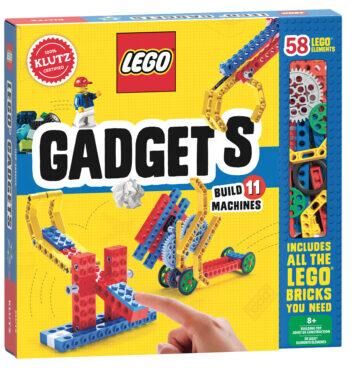
Klutz: LEGO GadgetsThis activity kit will have you building 11 machines including a gravity powered car and a wacky boxing robot. The fun doesn't stop once you've completed all of the projects in the book - open-ended prompts will inspire you to continue experimenting...24,99 $*Shipping: 0,00 $Secure redirect to the provider
-
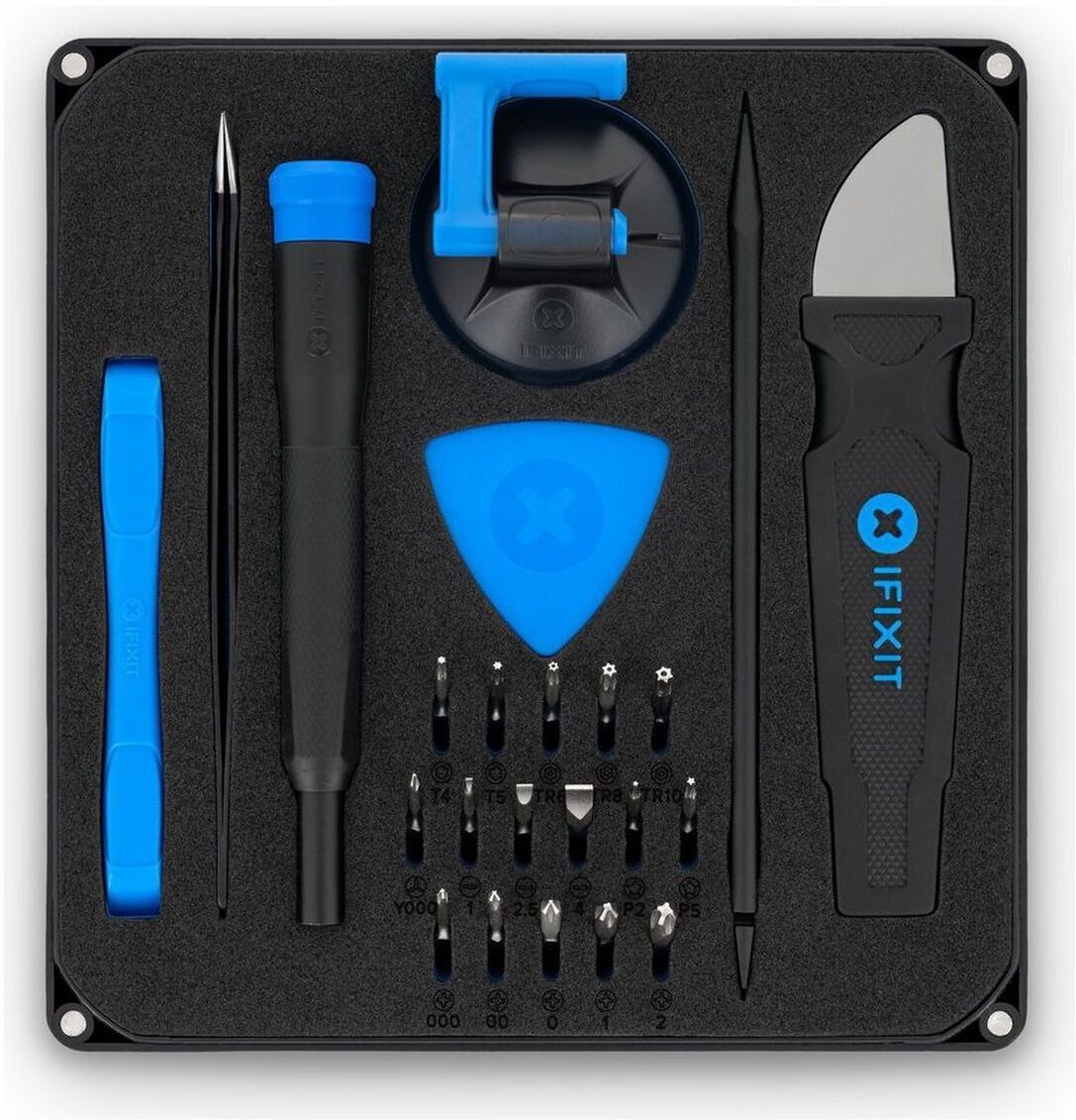
iFixit Essential Electronics ToolkitThe iFixit Essential Electronics Toolkit is a compact starter repair kit for phones, tablets, laptops, game consoles and other small electronics. It includes a precision bit driver with 16 precision bits plus the basic opening and prying tools needed for common repairs such as screen and battery replacements.40,99 £*Shipping: 0,00 £Secure redirect to the provider
-
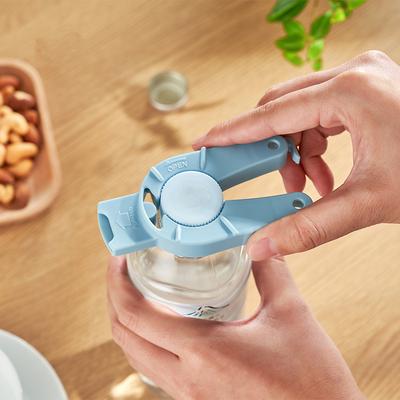
Multisell Products Hub Magnetic Bottle Opener For Household Mineral Water Plastic Beverage Bottles And Cap Opening, Kitchen Accessories Gadgets blueEffortless Cap Opening for Everyday Kitchens Upgrade your routine with this 1 pcs Kitchen Accessories Gadgets Magnetic Bottle Opener for Household Mineral Water Plastic Beverage Bottles and Cap Opening designed for convenience and comfort. It makes...34,97 $*Shipping: 0,00 $Secure redirect to the provider
-
Sesderma Reti Age 5 Liposomal Serum Anti-Aging Innovation 30mLA facial serum for wrinkles and signs of ageing. Reduces wrinkles and fine lines. Hydrates and strengthens barrier. Restores youthful radiance. 5-Retinoid System: smooths wrinkles, accelerates renewal, and boosts collagen. Biomimetic Peptides: fill expression lines by stimulating collagen synthesis.54,51 £*Shipping: 5,34 £Secure redirect to the provider

-
How can one efficiently use a Java HashMap?
One can efficiently use a Java HashMap by understanding its key features and best practices. First, it is important to choose the right data type for the key and value to ensure efficient retrieval and storage. Additionally, it is crucial to properly handle collisions by using an appropriate hashing function and implementing a strategy for resolving conflicts. Finally, it is important to consider the load factor and capacity of the HashMap to ensure optimal performance. By following these best practices, one can efficiently use a Java HashMap for storing and retrieving key-value pairs. **
-
How can you retrieve specific values from a HashMap?
To retrieve specific values from a HashMap in Java, you can use the `get()` method by passing the key for which you want to retrieve the value. For example, if you have a HashMap called `map` and you want to retrieve the value associated with the key "key1", you can do so by calling `map.get("key1")`. This method will return the value associated with the specified key, or null if the key is not found in the HashMap. **
-
How can specific values be printed from a HashMap?
Specific values can be printed from a HashMap by using the get() method to retrieve the value associated with a specific key. For example, if we have a HashMap called map and we want to print the value associated with the key "key1", we can use map.get("key1") to retrieve and print the value. Additionally, we can use a loop to iterate through the keys and print their associated values. Another option is to use the values() method to get a Collection of all the values in the HashMap and then iterate through this collection to print the values. **
-
How do I generate keys for a Java HashMap?
To generate keys for a Java HashMap, you can use any object that implements the hashCode() and equals() methods. These methods are used to determine the hash code of the key and to check for equality between keys. You can use built-in Java classes like String or Integer as keys, or you can create your own custom class and override the hashCode() and equals() methods to define the behavior for generating and comparing keys. Once you have your keys, you can use the put() method to add key-value pairs to the HashMap. **

How do you read the value in a HashMap?
To read the value in a HashMap, you can use the get() method by passing the key for which you want to retrieve the value. For example, if you have a HashMap called map and you want to retrieve the value associated with the key "key1", you can use map.get("key1") to get the value. This method will return the value associated with the specified key, or null if the key is not present in the HashMap. **
How do you store players in a HashMap or ArrayList?
In a HashMap, players can be stored by using their unique identifier as the key and the player object as the value. This allows for quick retrieval of player information based on their identifier. In an ArrayList, players can be stored by simply adding them to the list. The position of the player in the ArrayList can be used to access and manipulate player information. Both data structures provide different ways to store and access player information based on the requirements of the application. **
Top-Angebote
Products related to HashMap:
-
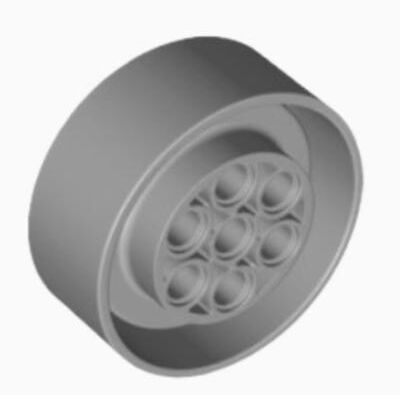
Lush Living Finds Perforated Brick Assembly Toy Accessories With Technology Mechanical Wheels Perforated Brick Assembly Toy Accessories With Technology Mechanical WheelsEnhance Creativity with Technology Mechanical Wheels Unlock the power of innovation with our technology mechanical wheels, designed specifically for perforated brick assembly toy accessories. Whether you are a hobbyist or a seasoned builder, these...43,97 $*Shipping: 0,00 $Secure redirect to the provider
-
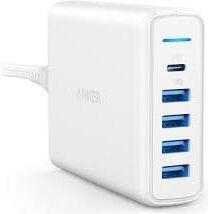
Anker PowerPort 60 W 6-Port Family-Sized Desktop USB Charger with PowerIQ Technology for Smartphones - White, NewThe Anker Advantage: Join the 10 million+ powered by Amazon's leading charging brand. Fast Charging Technology: PowerIQ and VoltageBoost combine to provide the fastest possible charge up to 2.4 amps per port or 12 amps overall (Qualcomm Quick Charge 2.0 not supported. For QC 2.0 charging, please see Anker's 18W USB Wall Charger). Ultra Powerful: 6 ports pump out 60 watts of power, enabling simultaneous multi-device charging. Certified Safe: Anker's MultiProtect safety system and UL certification ensure complete protection for you and your devices. Worldwide 100-240 volt AC input voltage What You Get: Anker PowerPort 6 (60W 6-Port USB Charging Hub), 5ft / 150cm detachable power cord, welcome guide, our fan-favorite 18-month warranty and friendly customer service.. Brand Anker Connectivity technology USB Connector type USB Type C Compatible devices Smartphones, Tablets, Laptop Compatible phone models All Smartphones Included components USB Cable Cable length 5 Feet Special feature Lightweight Design, Travel, Fast Charging Colour White Input voltage 100 Volts49,99 £*Shipping: 0,00 £Secure redirect to the provider
-
Klutz: LEGO GadgetsThis activity kit will have you building 11 machines including a gravity powered car and a wacky boxing robot. The fun doesn't stop once you've completed all of the projects in the book - open-ended prompts will inspire you to continue experimenting...24,99 $*Shipping: 0,00 $Secure redirect to the provider
-
iFixit Essential Electronics ToolkitThe iFixit Essential Electronics Toolkit is a compact starter repair kit for phones, tablets, laptops, game consoles and other small electronics. It includes a precision bit driver with 16 precision bits plus the basic opening and prying tools needed for common repairs such as screen and battery replacements.40,99 £*Shipping: 0,00 £Secure redirect to the provider
-
What is a HashMap in Java?
A HashMap in Java is a data structure that stores key-value pairs. It uses a technique called hashing to store and retrieve elements quickly. Each key is unique, and the HashMap allows null values and the null key. It provides constant-time performance for basic operations such as get and put, making it a popular choice for storing and retrieving data in Java applications. **
-
How do you use the HashMap in Java?
In Java, you can use the HashMap class to store key-value pairs. You can add elements to the HashMap using the put() method, specifying both the key and the value. You can retrieve a value from the HashMap using the get() method, passing in the key. You can also remove elements from the HashMap using the remove() method. Additionally, you can iterate through the elements of the HashMap using a loop or the forEach() method. **
-
How can one efficiently use a Java HashMap?
One can efficiently use a Java HashMap by understanding its key features and best practices. First, it is important to choose the right data type for the key and value to ensure efficient retrieval and storage. Additionally, it is crucial to properly handle collisions by using an appropriate hashing function and implementing a strategy for resolving conflicts. Finally, it is important to consider the load factor and capacity of the HashMap to ensure optimal performance. By following these best practices, one can efficiently use a Java HashMap for storing and retrieving key-value pairs. **
-
How can you retrieve specific values from a HashMap?
To retrieve specific values from a HashMap in Java, you can use the `get()` method by passing the key for which you want to retrieve the value. For example, if you have a HashMap called `map` and you want to retrieve the value associated with the key "key1", you can do so by calling `map.get("key1")`. This method will return the value associated with the specified key, or null if the key is not found in the HashMap. **
Similar search terms for HashMap
-
Multisell Products Hub Magnetic Bottle Opener For Household Mineral Water Plastic Beverage Bottles And Cap Opening, Kitchen Accessories Gadgets blueEffortless Cap Opening for Everyday Kitchens Upgrade your routine with this 1 pcs Kitchen Accessories Gadgets Magnetic Bottle Opener for Household Mineral Water Plastic Beverage Bottles and Cap Opening designed for convenience and comfort. It makes...34,97 $*Shipping: 0,00 $Secure redirect to the provider
-
Sesderma Reti Age 5 Liposomal Serum Anti-Aging Innovation 30mLA facial serum for wrinkles and signs of ageing. Reduces wrinkles and fine lines. Hydrates and strengthens barrier. Restores youthful radiance. 5-Retinoid System: smooths wrinkles, accelerates renewal, and boosts collagen. Biomimetic Peptides: fill expression lines by stimulating collagen synthesis.54,51 £*Shipping: 5,34 £Secure redirect to the provider
-
Hikmicro MINI2 V2 Thermal Imaging Camera for SmartphonesHikmicro MINI2 V2 Thermal Imaging Camera for Smartphones (Mini2-Series-V2) The Hikmicro MINI2 V2 Thermal Imaging Camera turns a smartphone into a professional thermal imager. With its high-resolution 256 x 192 VOx sensor (49,152 pixels) and SuperIR image enhancement, it produces clear thermal images for diagnostics, inspections and everyday problem-solving. Suited to HVAC engineers, electricians, plumbers, homeowners and hobbyists, the MINI2 V2 is compact, lightweight and battery-free, powered directly from the connected phone. It measures -20°C to 400°C for reliable results across a wide range of applications, with no screen of its own — all viewing and control happens through the smartphone via the HIKMICRO Viewer app. Key Features & Benefits High Thermal Resolution:250,80 £*Shipping: 0,00 £Secure redirect to the provider
-
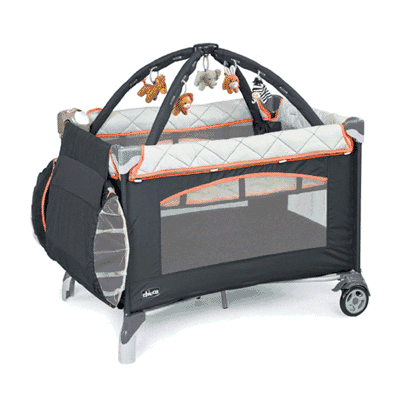
Chicco Lullaby Playard with Electronics in IcebergQuilted mattress is thickly padded for babys nap time or playtime comfort ; Removable mattress covering is easy to machine wash ; Changing table is elevated for ease of use and thickly padded for babys comfort ; Quilted bassinet is perfect for...159,99 $*Shipping: 0,00 $Secure redirect to the provider
-
How can specific values be printed from a HashMap?
Specific values can be printed from a HashMap by using the get() method to retrieve the value associated with a specific key. For example, if we have a HashMap called map and we want to print the value associated with the key "key1", we can use map.get("key1") to retrieve and print the value. Additionally, we can use a loop to iterate through the keys and print their associated values. Another option is to use the values() method to get a Collection of all the values in the HashMap and then iterate through this collection to print the values. **
-
How do I generate keys for a Java HashMap?
To generate keys for a Java HashMap, you can use any object that implements the hashCode() and equals() methods. These methods are used to determine the hash code of the key and to check for equality between keys. You can use built-in Java classes like String or Integer as keys, or you can create your own custom class and override the hashCode() and equals() methods to define the behavior for generating and comparing keys. Once you have your keys, you can use the put() method to add key-value pairs to the HashMap. **
-
How do you read the value in a HashMap?
To read the value in a HashMap, you can use the get() method by passing the key for which you want to retrieve the value. For example, if you have a HashMap called map and you want to retrieve the value associated with the key "key1", you can use map.get("key1") to get the value. This method will return the value associated with the specified key, or null if the key is not present in the HashMap. **
-
How do you store players in a HashMap or ArrayList?
In a HashMap, players can be stored by using their unique identifier as the key and the player object as the value. This allows for quick retrieval of player information based on their identifier. In an ArrayList, players can be stored by simply adding them to the list. The position of the player in the ArrayList can be used to access and manipulate player information. Both data structures provide different ways to store and access player information based on the requirements of the application. **
* All prices are inclusive of VAT and, if applicable, plus shipping costs. The offer information is based on the details provided by the respective shop and is updated through automated processes. Real-time updates do not occur, so deviations can occur in individual cases. ** Note: Parts of this content were created by AI.